The forged work is not decoration sitting on top. It becomes the thing that gives the room its weight.
It started with a $200 table. Before the custom homes, before the commercial buildouts, before any of it, there was a piece of steel and a question: what if I could make something with my hands that nobody else could make?
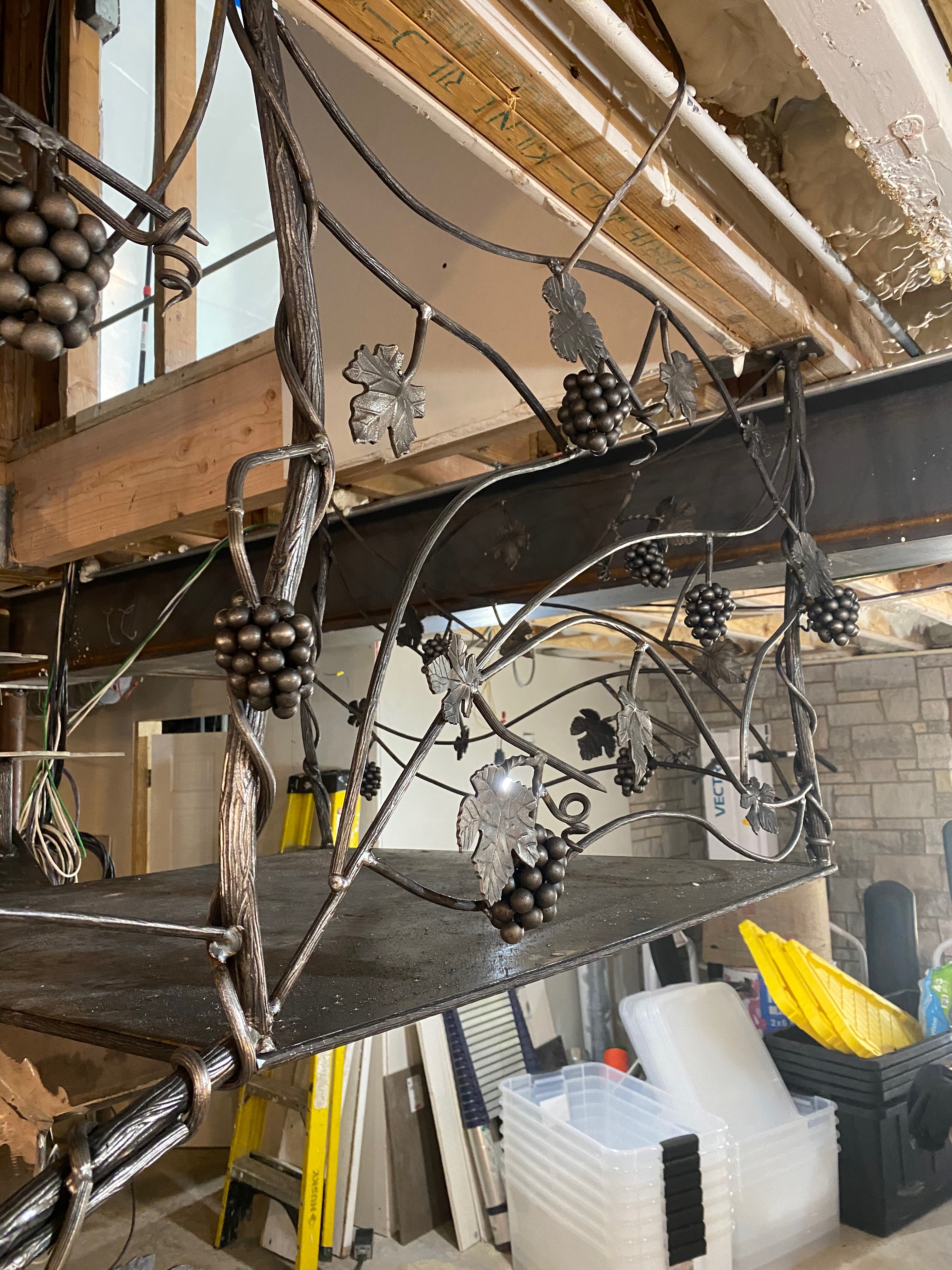
That question has driven nearly four decades of ornamental ironwork. Not fabrication — that’s a different thing. Fabrication is cutting steel to spec and welding it together. Ornamental iron is sculpture that happens to be structural. Every curve, every leaf, every tendril is shaped at the forge, one piece at a time, by feel. The steel glows orange. The hammer falls. The metal moves. There is no undo button. There is no CNC program to fall back on. It comes from the hands or it doesn’t come at all.
The difference between mass-produced metalwork and hand-forged ornamental iron is the difference between a printed poster and an oil painting. You can spot it from across the room. Mass-produced railings have uniform spacing, machine-perfect curves, and a sameness that your eye reads as “fine.” Hand-forged work has variation. Not imperfection — variation. The kind of subtle irregularity that tells your brain a human being made this. A leaf that curls slightly different from the one beside it. A vine that wraps with the organic unpredictability of actual growth. Your hand feels the difference when it grips the railing. Your eye notices it every time you walk past.
The applications go far beyond railings. We’ve forged candelabras that became the centerpiece of dining rooms. Wine cellar doors that turned a basement into a destination. Entrance gates that set the tone for an entire property before you reach the front door. Custom furniture — tables, shelving, light fixtures — where the steel structure isn’t hidden behind upholstery but celebrated as the design element. Each piece is designed for a specific space, a specific client, a specific purpose. None of it exists in a catalog.
What makes ornamental iron endure is the same thing that makes it beautiful: it’s real. Real steel, real fire, real labor. In a world of snap-together components and drop-ship furniture, a hand-forged iron piece is an act of defiance. It says someone cared enough to stand at an anvil for hours and shape raw material into something that will outlast the building it’s installed in. That kind of craft doesn’t just decorate a space. It anchors it. It gives a room weight and presence and soul. And once you’ve lived with it, everything else feels thin.