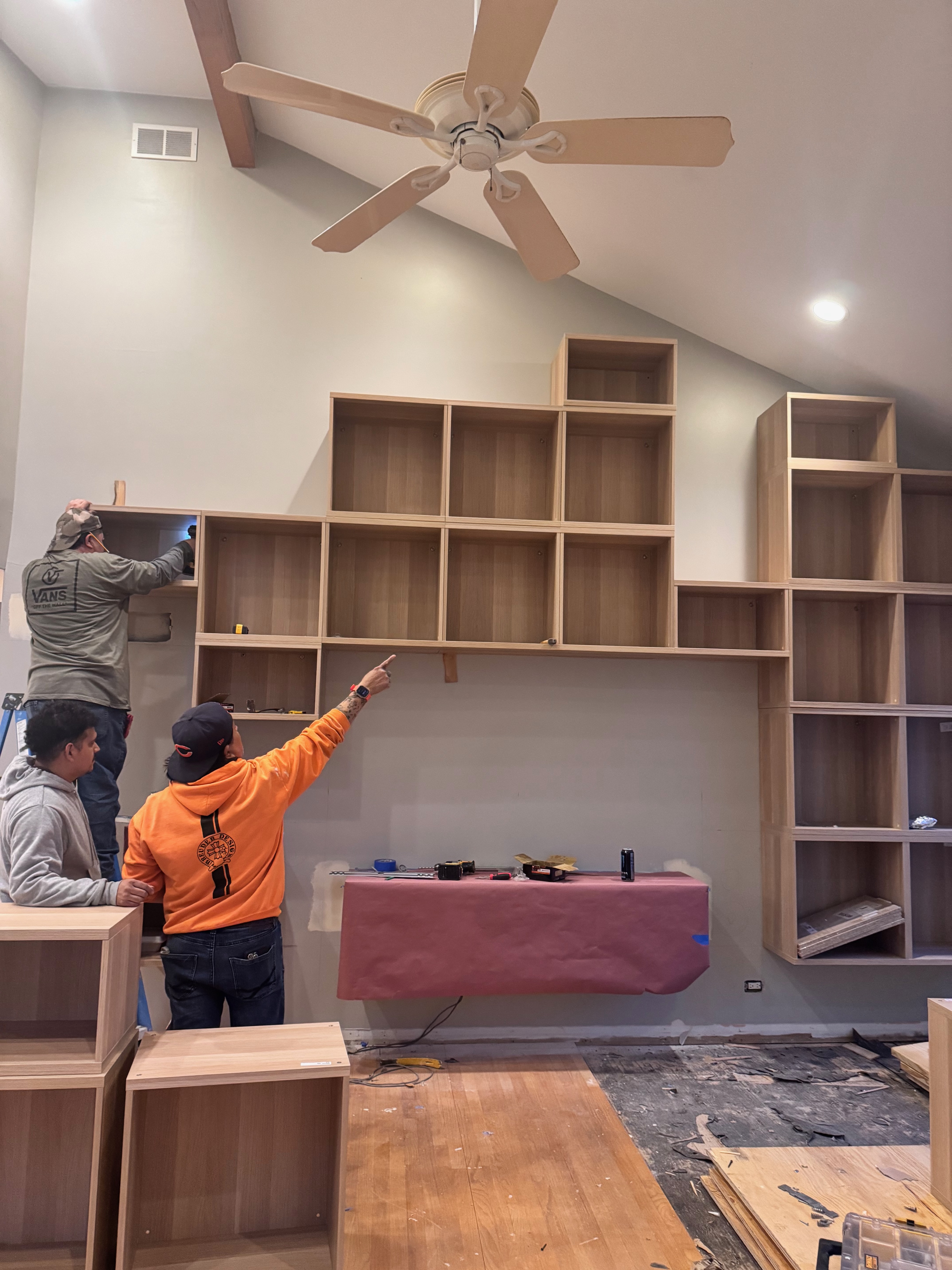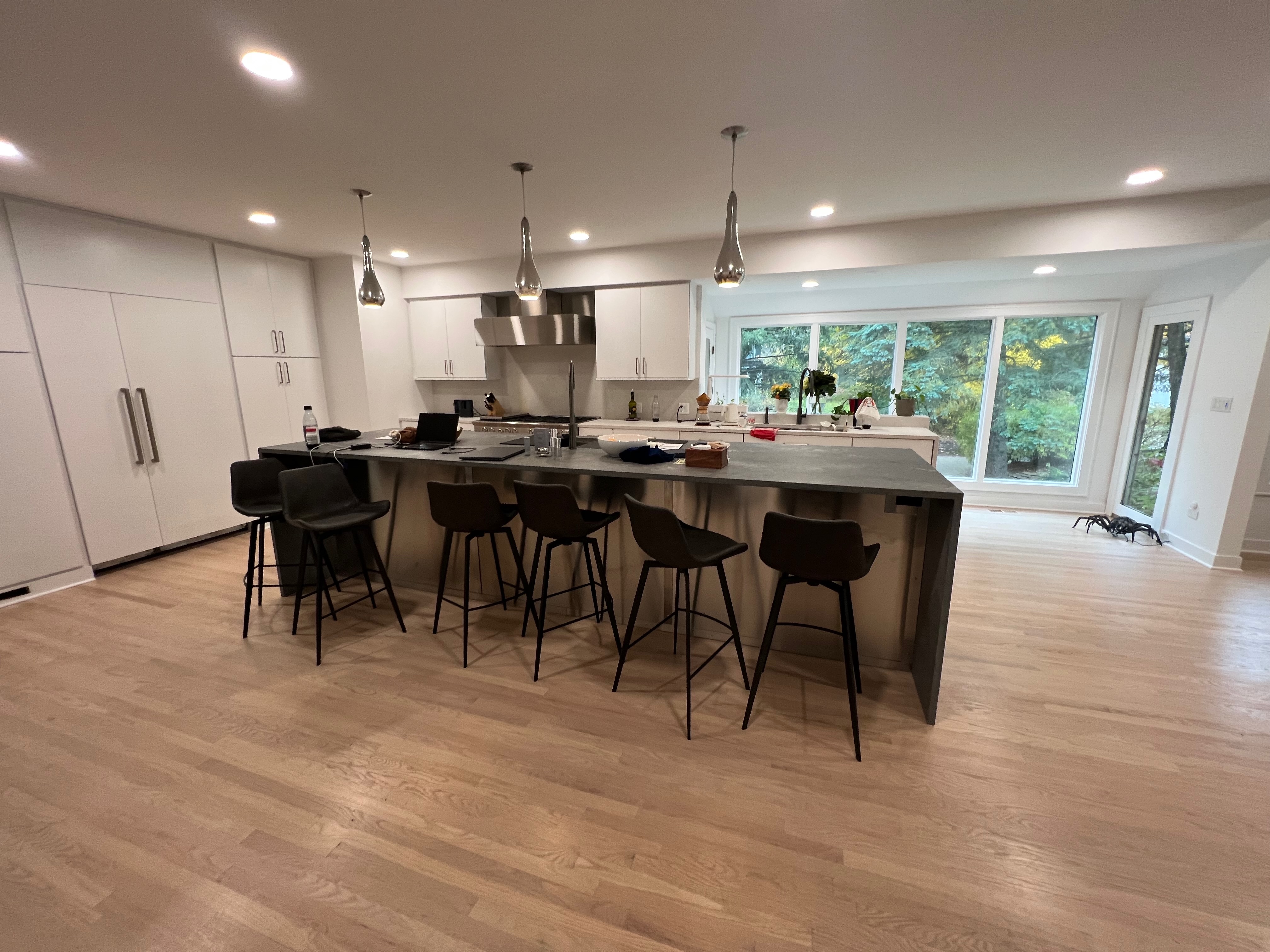
A room that supports breakfast, circulation, and hosting all at once is the built version of this idea.
Most contractors ask what you want your kitchen to look like. We ask how you make breakfast.
That’s the difference between building a room and designing a life. Living Design starts with the premise that a home should fit the people in it — not the other way around. It’s not a style. It’s not a trend you’ll see on a mood board. It’s a way of thinking about space that starts with behavior and ends with beauty.
Here’s what that looks like in practice. A family tells us they want a new kitchen. Before we draw a single line, we spend time understanding how they move through the morning. Where does the coffee happen? Where do the kids sit? Does anyone actually use the island, or is it just a place to drop the mail? The answers to those questions shape everything — the counter height, the storage layout, the sight lines from the stove to the family room. The kitchen ends up looking great, but more importantly, it works the way their life works.
Living Design also means thinking about what a space will become, not just what it is today. Kids grow up. Hobbies change. The home office that seemed optional in 2019 became essential by 2020. We build flexibility into our projects because rigidity is the enemy of a home that lasts. A basement that can be a playroom now and a studio later. A guest room with built-ins that double as a home office. Spaces that adapt because life doesn’t stay still.
The craft matters too. Living Design isn’t an excuse to ignore aesthetics — it’s a reason to take them more seriously. When a space is designed around real life, every material choice, every hardware pull, every joint has to earn its place. We don’t add ornamentation for its own sake. We add details that serve a purpose and happen to be beautiful. A hand-forged iron railing isn’t just decorative — it’s the thing your hand touches every single day. It should feel right.
This is why we do everything in-house. When the same team that designs the space also frames the walls, builds the cabinetry, forges the metalwork, and installs the tile, everything speaks the same language. There’s no translation loss between the architect’s intent and the carpenter’s execution. The design lives all the way through the build, from the first sketch to the last coat of finish. That’s Living Design.